London’s Most Curated Enclave
Mount Street and the rise of the hyper-curated neighbourhood
“The practices of artists … are deeply rooted in the idea of art playing an important role in a social context ... It would almost be bizarre for them to see their work exhibited in a clandestine environment for three weeks and end up in a private home, and not to create strategies to be a part of a broader conversation.”
Whereas London, en masse, can feel somewhat intimidating, there are those areas that feel rather more personal. The Mount Street neighbourhood is just such a place. Not, however, in the sentimental sense in which the word is so often employed. This is by no means the sort of “village” environment one often hears people coo over, and there’s no point describing it as anything other than pure, unadulterated luxury. There is, regardless, a unifying aim here of creating something unique. Despite the multitude of high-end outposts one might easily encounter in Paris, Milan, or Rome, Mount Street manages to give one the distinct feeling of discovering something entirely new. This is particularly apparent in terms of dining, where, with no hint of a chain, the neighbourhood boasts a multitude of wonderful restaurants such as the newly revived American speakeasy Automat, the iconic Scott’s and the eponymously named Mount St. Restaurant. The latter, a modern British eatery set above the Audley Public House—and we’ll come to that later—is something of a Gesamtkunstwerk. Designed by Studio Laplace, headed by Christophe Comoy and Luis Laplace, the space integrates an extraordinary collection of over 200 works of art, including pieces by Andy Warhol, Henri Matisse, Philip Guston, Peter Fischli and David Weiss. Even the ground on which one walks, titled “Broken Floor”, is a custom Palladiana mosaic by Rashid Johnson.
The inspiration came from Johnson’s renowned Broken Men series, featuring fractured, highly abstracted faces and figures that delve into the complexities of the contemporary human condition—exploring themes of vulnerability, social placement, and psychological pressure. Deconstructing these images into fragmented shards of marble, the floor serves a dual purpose: reflecting how exposed we are in modern society, and offering a spiritual narrative of reconstruction and healing through the act of piecing the stones together. A recent dinner there involved sitting directly beneath Lucian Freud’s A Plate of Prawns (1958), and, rather appropriately, devouring pigeon accompanied by a remarkably elegant Burgundy. In a choice echoing the art-strewn eateries of Mr Chow, even the salt and pepper shakers were designed by artist Paul McCarthy, modelled after his giant, and now infamous, 79-foot inflatable sculpture, Tree. That is, for those who remember—and Parisians certainly will—the monumental work people completely lost their minds over when it was erected in the city’s historic Place Vendôme. It merged, or so we’re told, the classic Christmas spruce with the avant-garde modernism of Constantin Brâncuși—an apt choice, one might assume, were it not for the striking resemblance to an adult toy. While McCarthy was setting it up, a passerby walked over, asked if he was the artist, and promptly punched him in the face three times before fleeing the scene. Just a few days later, vandals cut the power supply and severed the support cables, leaving it slumped on the pavement, depleted entirely of any festive cheer—assuming, of course, there had been any to begin with.
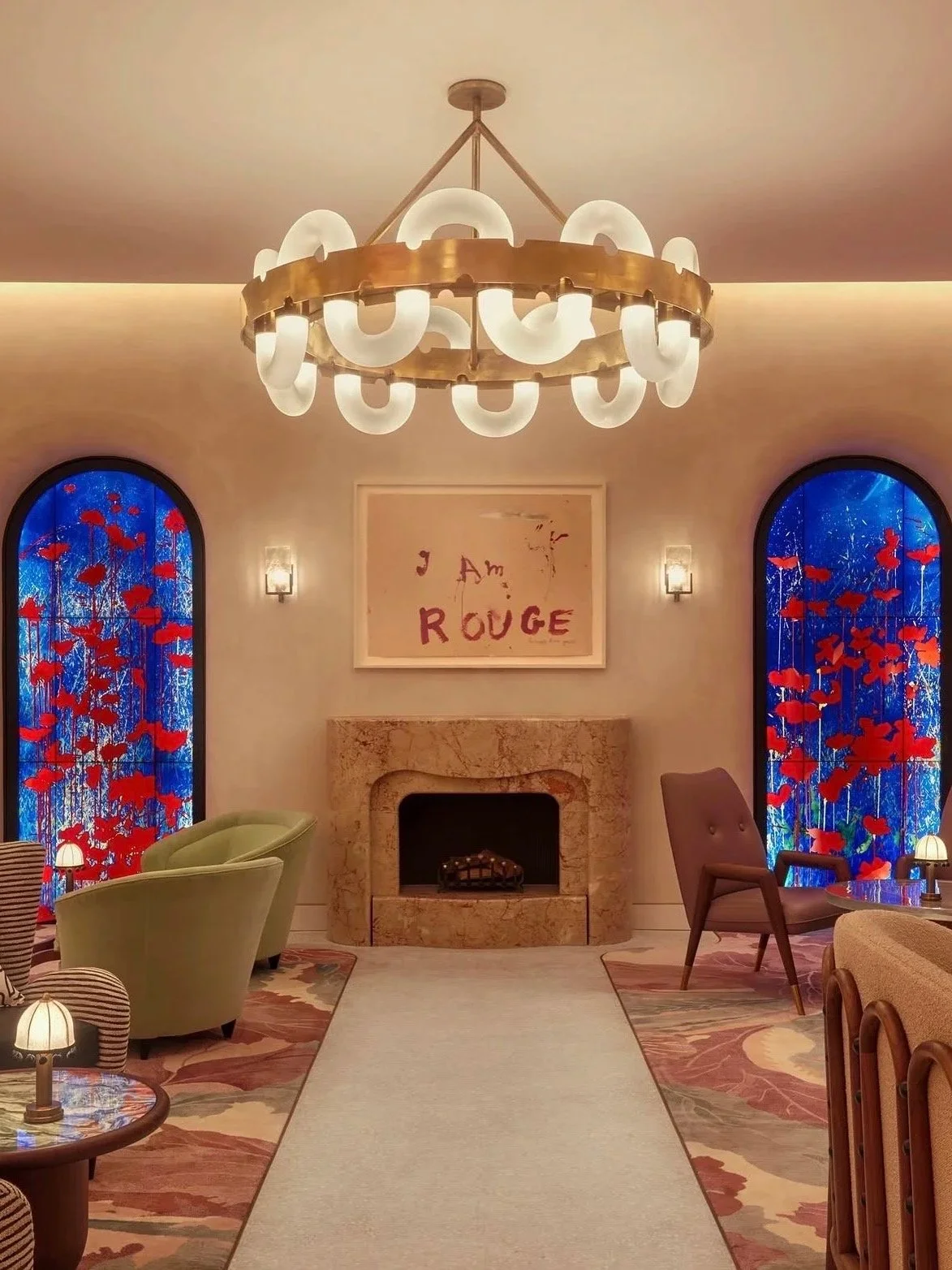
Louise Bourgeois’ “I Am Rouge” presides over the fireplace at the Connought’s Red Room, designed by Bryan O'Sullivan to feel like the drawing room of an eclectic art collector
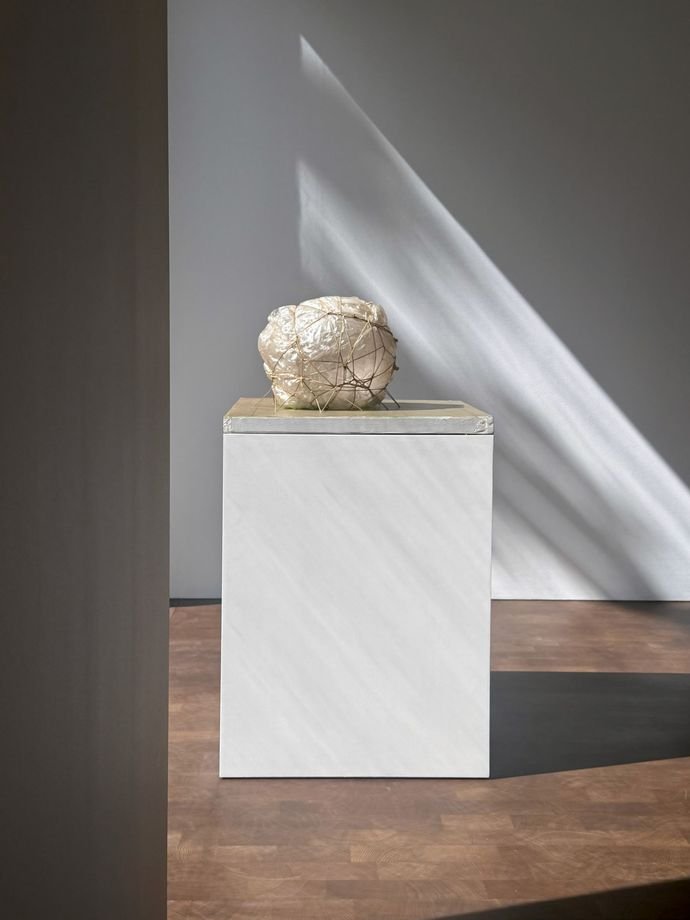
A work from “Christo: Air”, the recent exhibition at Gagosian (Grosvenor Hill), an historic catalogue ofChristo and Jeanne-Claude’s work
Bringing that subversion back across the Channel to Mount Street, there was, apparently, a desire to cocoon the entirety of the first floor. On its underside, the ceiling of the Audley below was frescoed by the late Phyllida Barlow with a kaleidoscopic collage of hand-painted paper, its abstract shapes designed to mimic the architecture and curvature of the pub's Victorian windows. This should, perhaps, come as little surprise, as the entire five-story building was a singular, massive restoration project by Artfarm—founded by Iwan and Manuela Wirth, the powerhouse Swiss couple behind Hauser & Wirth. Indeed, to further bolster their presence in the neighbourhood, the gallery has taken over the lower floors of the famous Grade II-listed Thomas Goode Building. Here, Laplace is converting the historic, time-capsule property into a 15,000-square-foot, museum-scale exhibition space, creating a monumental new hub for contemporary art—though there will, inevitably, still be those who mourn the china shop preceding it. In terms of galleries, Larry Gagosian already has two spaces just a short walk away on Davies Street and Grosvenor Hill. Taken together with the nearby outposts of David Zwirner and Thaddaeus Ropac, what is, aesthetically speaking, a tiny red brick grid of elegant Victorian streets is fast becoming, arguably, the most concentrated pocket of mega-galleries in the world.
Art, for that matter, seems to permeate the very fabric of the area. Even the Connaught’s most recent bar, The Red Room, was specifically designed by Bryan O'Sullivan to feel like the drawing room of an eclectic art collector. Explicitly curated by Paddy McKillen, the space centres almost exclusively on works by visionary female artists. Louise Bourgeois’ I Am Rouge presides over the fireplace; a characteristically raw, text-based confrontation rendered in the artist's signature, bleeding crimson. For Bourgeois, red was the colour of the visceral—of blood, jealousy, and the intense emotional currents of a childhood spent amidst the scarlet dyes of her parents’ tapestry workshop—and here it lends a poignant, almost wounding vulnerability to the otherwise plush surroundings. Elsewhere, one alights on Jenny Holzer’s Benghazi—bleeding scarlet rectangles painted over a heavily redacted, declassified US government document, a somewhat more unusual choice, perhaps, effectively turning state secrecy, political trauma and the erasure of truth into a backdrop to apéritif. Tia-Thuy Nguyen’s Scarlet Mist and Trina McKillen’s photographic work Composition #8 complete this gynocentric mélange, the only exception being two stained-glass panels by celebrated British glass painter Sir Brian Clarke, though it’s unclear why the exception was made outside of pure aesthetic synergy.
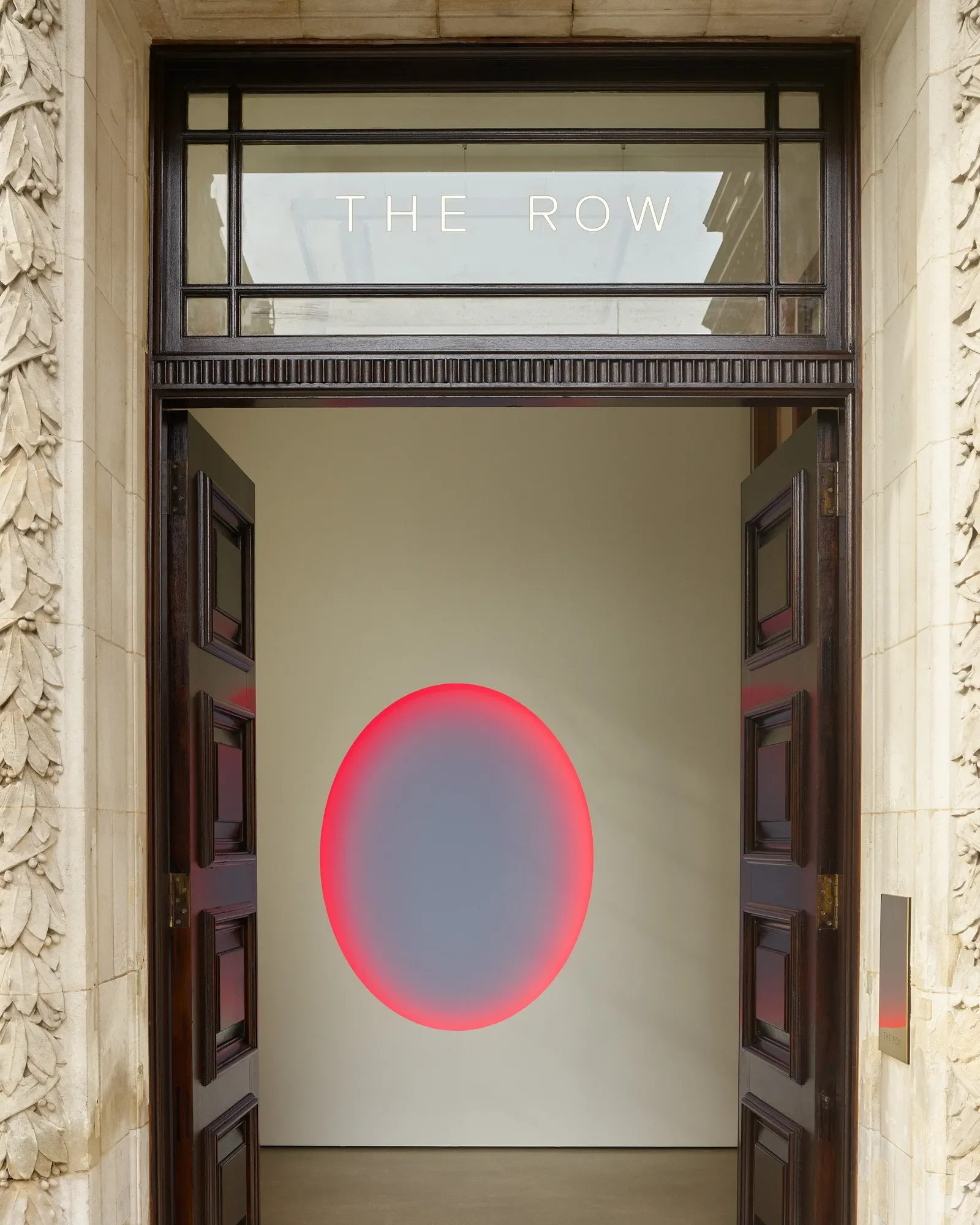
James Turrell’s “Jai Singh’s Sky” (from his Elliptical Glass series), which greets visitors at the entrance to The Row’s London flagship
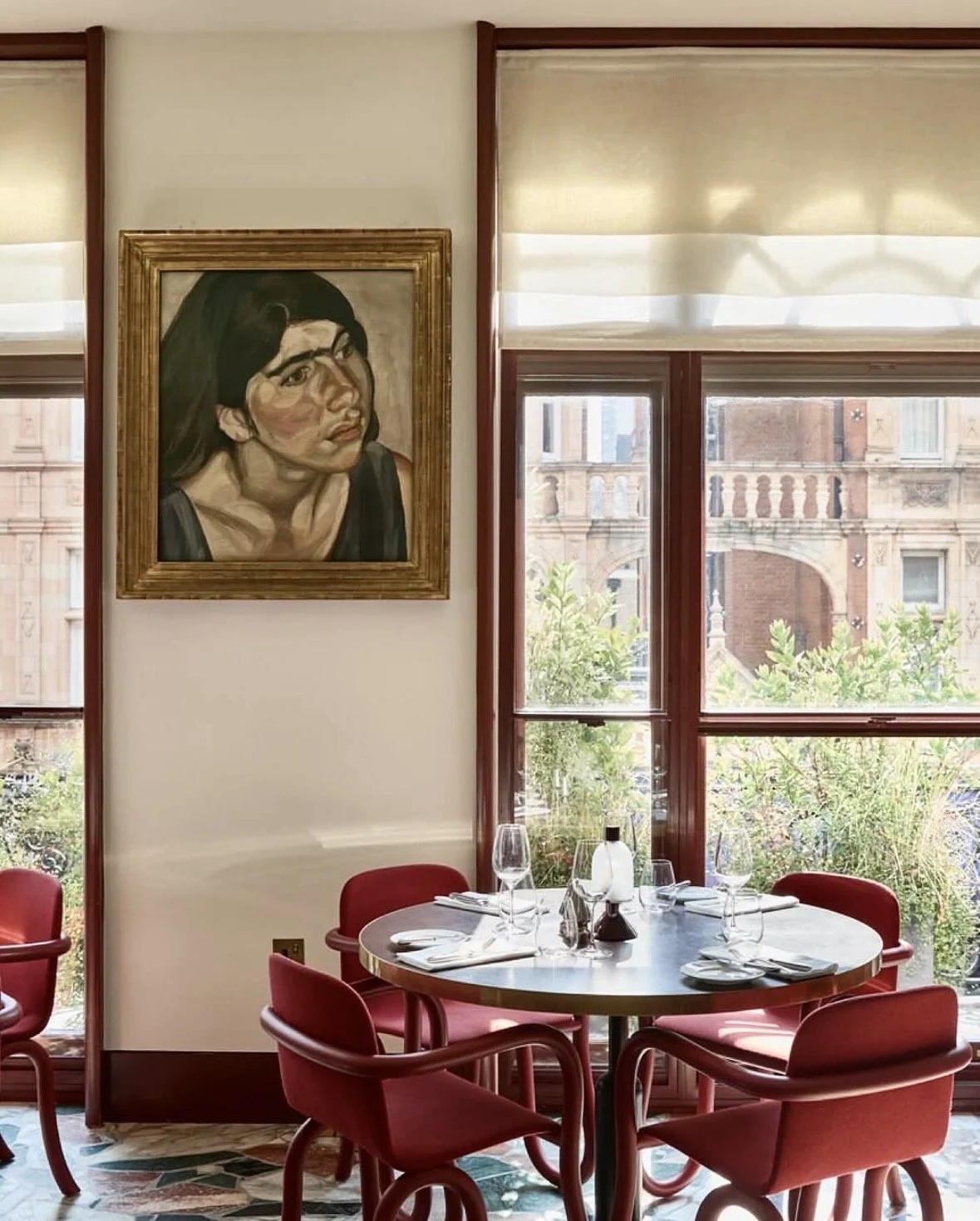
Lucian Freud’s “Annie” (1962), depicting the artist’s daughter, noted for its intimate, expressive style, hanging at Mount Street. Restaurant
Of course, it’s not just the gastronomic offerings. The Row’s London flagship at 15 Carlos Place, designed by art-world darling Annabelle Selldorf, is outfitted in a similarly blue-chip fashion. The undisputed crown jewel is James Turrell’s Jai Singh’s Sky (from his Elliptical Glass series), which greets visitors at the entrance. This colour-shifting, backlit installation slowly morphs from deep purples into soft pinks, acting as an ethereal visual portal drawing curious passersby into the store’s minimalist sanctum. Once inside, John Chamberlain’s 1978 sculpture Funn—a massive piece of crushed and crumpled automobile metal—anchors the space, providing a sharp, industrial contrast to the brand’s simple cashmere and silk silhouettes. Elsewhere, one encounters three iconic sculptures by the Japanese-American master Isamu Noguchi scattered across the store’s two floors, including Jack in the Box (1984), Squirrel (1984), and Victim (1962). Then there’s the rotating inventory of rare, historical furniture and decorative arts curated by New York-based decorator Michael Bargo. All available to purchase, the collection has variously included a monolithic dining table by Charlotte Perriand, a velvet couch by Gio Ponti, and wicker chairs by Michel Buffet—not forgetting, nestled alongside ready-to-wear pieces, hand-carved pitchers and cups by Alexandre Noll and organic Masa ceramics.
It’s not only indoors one finds art, as directly outside the Connaught, exposed to the elements, is a somewhat understated installation titled Silence, a minimalist masterpiece unveiled in 2011 by legendary Japanese architect Tadao Ando. Fortunately, unlike Ando's Richard Sachs house in Malibu, it has thus far escaped the attentions of “Ye”—the artist formerly known as Kanye West—who bought the beachfront mansion with the intention of turning it into a “bomb shelter from the 1910s” to serve as his “batcave”, whatever that means, ultimately reducing it to little more than a hollowed-out concrete shell. Given Ye’s effective ban from entering the UK, on the grounds, according to the Home Office, of his presence “not being conducive to the public good”, we can sleep soundly in the knowledge that Silence should remain pristine, at least for the foreseeable future. The fountain, a raised granite infinity pool built around two century-old London plane trees, sits beneath a thin skim of water that ripples and slips over its polished granite edge. Every fifteen minutes, a cloud of fine mist erupts from its base, momentarily subsuming the street, the hotel façade, and passing shoppers into an ethereal whiteout. It perfectly encapsulates Ando’s philosophy: "I don’t believe architecture has to speak too much. It should remain silent and let nature in the guise of sunlight and wind.”
It’s a rather fitting, theatrical punctuation mark for the neighbourhood. Whereas so much art is hidden away behind the heavy doors of institutions, or kept under lock and key, for the sole enjoyment of the 0.01%, Mount Street has pulled off a somewhat different approach. By treating its pavements, pubs, shopfronts, and even its salt and pepper shakers as an extension of the exhibition space, it bypasses what some perceive as the clinical austerity of traditional gallery-going. It remains a stretch to refer to such a set-up as democratic—it is, after all, one of the most exclusive areas on earth—and it would be entirely paradoxical to describe it as a village. After all, a village requires compromise. Instead, Mount Street is a rarified, hyper-curated open-air salon, unashamedly so, where you can, quite literally, spend your day surrounded by museum-grade masterworks, fine Burgundy and, lest we forget, a zen-inducing Japanese fog.